Amitabha Buddha: Exploring the Buddha of Infinite Light
Amitabha Buddha – Overview
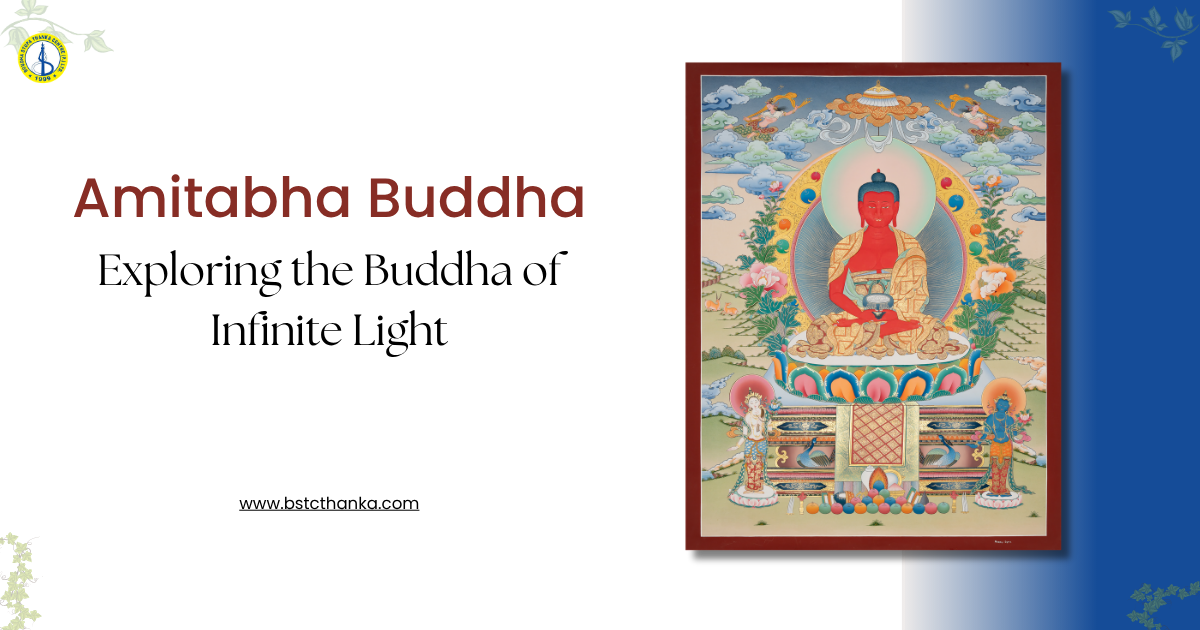
Amitabha Buddha, meaning “Infinite Light”, is one of the most revered Buddhas in Mahayana and Vajrayana Buddhism. He symbolizes boundless compassion, wisdom, and spiritual guidance. Devotees meditate on Amitabha to achieve rebirth in the Pure Land (Sukhavati), a realm free from suffering and distractions. In Thangka art, Amitabha is often depicted as a serene figure surrounded by Bodhisattvas, serving as a tool for meditation, visualization, and devotion.
Who is Amitabha Buddha?
-
Amitabha Buddha, also called Amida Buddha in Japan, represents infinite light and life.
-
He made 48 vows as Bodhisattva Dharmakara to create the Pure Land for all sentient beings who sincerely call his name.
-
His teaching focus on compassion, mindfulness, and the path to enlightenment.
Symbolism of Amitabha Buddha
-
Color: Red or golden → symbolizes love, compassion, and light
-
Mudra (Hand Gesture): Meditation Mudra (Dhyanamudra) or Blessing Mudra (Varada Mudra)
-
Lotus Seat: Represents purity and spiritual awakening
-
Objects: Vase of nectar symbolizes long life and healing
Amitabha Buddha in Thangka Art
-
Amitabha appears as the central figure in many Tibetan and Nepalese Thangka paintings.
-
Often accompanied by Avalokiteshvara (Compassion) and Mahasthamaprapta (Wisdom).
-
The paintings are used for meditation, devotion, and visualization practice, helping practitioners cultivate a mind of compassion and clarity.
How to Meditate on Amitabha Buddha
-
Place a Thangka or image of Amitabha Buddha in a quiet, clean space.
-
Focus on the central figure and observe every detail.
-
Recite the Amitabha mantra: "Om Ami Dewa Hri" or “Namo Amitabha” .
-
Visualize light and compassion spreading from Amitabha throughout your mind and body.
-
Practice daily for 10–20 minutes to cultivate mindfulness and inner peace.
FAQ – Amitabha Buddha
Q1: Who is Amitabha Buddha?
A: Amitabha Buddha, meaning “Infinite Light,” is a central figure in Pure Land Buddhism, representing compassion, wisdom, and spiritual guidance.
Q2: What is the significance of Amitabha in Thangka art?
A: Amitabha in Thangka paintings serves as a meditative and devotional tool, often surrounded by Bodhisattvas to inspire mindfulness and spiritual practice.
Q3: How can I meditate on Amitabha Buddha?
A: Sit in a quiet space, focus on Amitabha’s image, recite his mantra, and visualize light and compassion spreading in your mind and body.
Q4: What are the key symbols of Amitabha Buddha?
A: Common symbols include the lotus seat (purity), meditation or blessing mudras (serenity and compassion), and a vase of nectar (healing and longevity).
Q5: What is the Pure Land of Amitabha Buddha?
A: The Pure Land, called Sukhavati, is a blissful realm free from suffering, where devotees can practice Dharma and achieve enlightenment under Amitabha’s guidance.
Conclusion
Amitabha Buddha represents infinite light, compassion, and wisdom. Meditating on Amitabha, reciting his mantra, and contemplating Thangka paintings helps practitioners cultivate inner peace, spiritual clarity, and a mind of loving-kindness. Whether through visualization, devotion, or art appreciation, Amitabha Buddha continues to guide countless followers toward enlightenment and liberation.