Midukpa (Akshobhya Buddha): The Buddha of the Deep Meditation and Unshakable Wisdom.
Akshobhya Buddha (Midukpa in Tibetan Buddhism) is among the most significant Buddhas of the Mahayana and Vedanta traditions. He is among the Five Dhyani Buddhas, and, in particular, he is the one who turns anger into wisdom and helps practitioners develop a profound inner stability.
Midukpa is a state of consciousness in a deep state that transcends the physical form. He has been interpreted as a formless Buddha, that is, he is not a definite identity but a state of awakened mind which is achieved by deep meditation.
Essentially, Midukpa represents the pinnacle of mental stability with meditation. When the mind goes into profound contemplation it is perfectly calm, stable, and unperturbed. Such calmness and clarity is linked to the achievement of Akshobhya Buddha, the “Unshakable One.
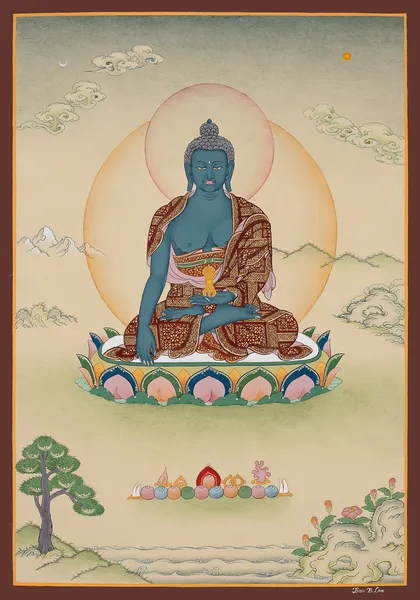
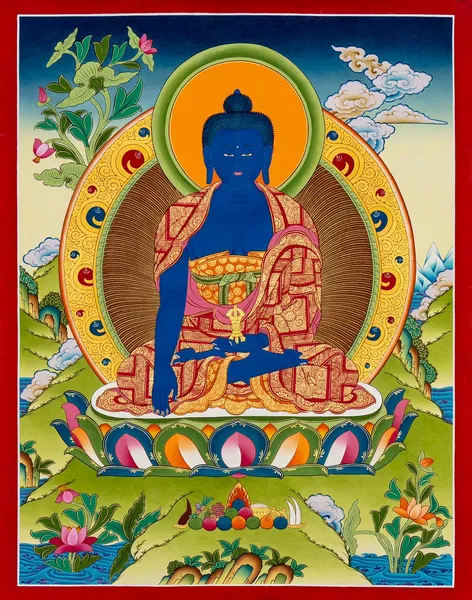
His element is water, the symbol of clarity, depth and reflection. His allegoric blueness is a sign of great consciousness and peaceful mind. He is customarily portrayed with a vajra, symbolizing invincible wisdom, and earth-touching gesture signifies steadiness, stability, and illumination.
Akshobhya Buddha - Overview
One of the Five Dhyani Buddhas in Buddhism is Akshobhya Buddha. He embodies wisdom and inner stability, which cannot be shaken. In Mahayana and Vedarayana, he is also credited with turning anger into wisdom.
Thangka paintings are generally painted in blue with Akshobhya Buddha in meditation pose. He is a representation of stillness, clarity and unflinching awareness.
Who is Akshobhya Buddha?
Akshobhya Buddha is the embodiment of the transformation of anger into the mirror-like wisdom. He is also conceived as a highest state of meditative which is reached by intense concentration when the mind is calm, stable and unshakable.
He is usually depicted with a vajra in his hand and with the earth-touching mudra. His blessings are sought by practitioners to have a clear mind, stability and spiritual development.
Symbolism of Akshobhya Buddha
Akshobhya Buddha’s symbols hold deep meaning:
The blue color is a symbol of tranquility and prudence.
Vajra is a symbol of unshaken perception.
Mudra of earth-touching symbolizes stability and enlightenment.
Water element is a symbol of clarity and reflection.
The pose of meditation is one of calmness and focus.
These signs are symbolic of stability, wisdom and profound meditation.
Akshobhya Buddha - Thangka Art
Thangka paintings often include Akshobhya Buddha, who is usually depicted in a meditative pose with a serene expression. He frequently features in mandalas as one of the Five Dhyani Buddhas.
These paintings are meditated, prayed and spiritually practised. They assist the practitioners to become focused and mentally stable.
Akshobhya Buddha How to Meditate.
These are some easy steps to follow:
Find a comfortable spot and sit.
See a picture of Akshobhya Buddha.
Picture blue light emanating out of him.
Verbal repeat:
Om Akshobhya Hum
Think of the light soothing your mind and getting rid of anger.
Exercise 10 -20 minutes a day.
FAQs about Akshobhya Buddha.
Q1: Who was Akshobhya Buddha?
One of the Five Dhyani Buddhas is called Akshobhya Buddha and symbolizes unwavering wisdom and profound meditation.
Q2: What is the meaning of Akshobhya Buddha?
He is a symbol of stability, composure and the conversion of anger to wisdom.
Q3: What is the reason why Akshobhya Buddha is blue?
Blue can be seen as a sign of calmness, depth and wisdom that is of mirror.
Q4: The mantra of Akshobhya Buddha?
Om Akshobhya Hum
Q5: What can I do to be reverent to Akshobhya Buddha?
You can meditate, chant his mantra and concentrate on his image.
Conclusion
Akshobhya Buddha is a sign of immovable wisdom and profound meditative consciousness. Akshobhya Buddha meditation assists in cultivating a sense of calm, clarity and inner stability as well as promoting wisdom and spiritual development.