
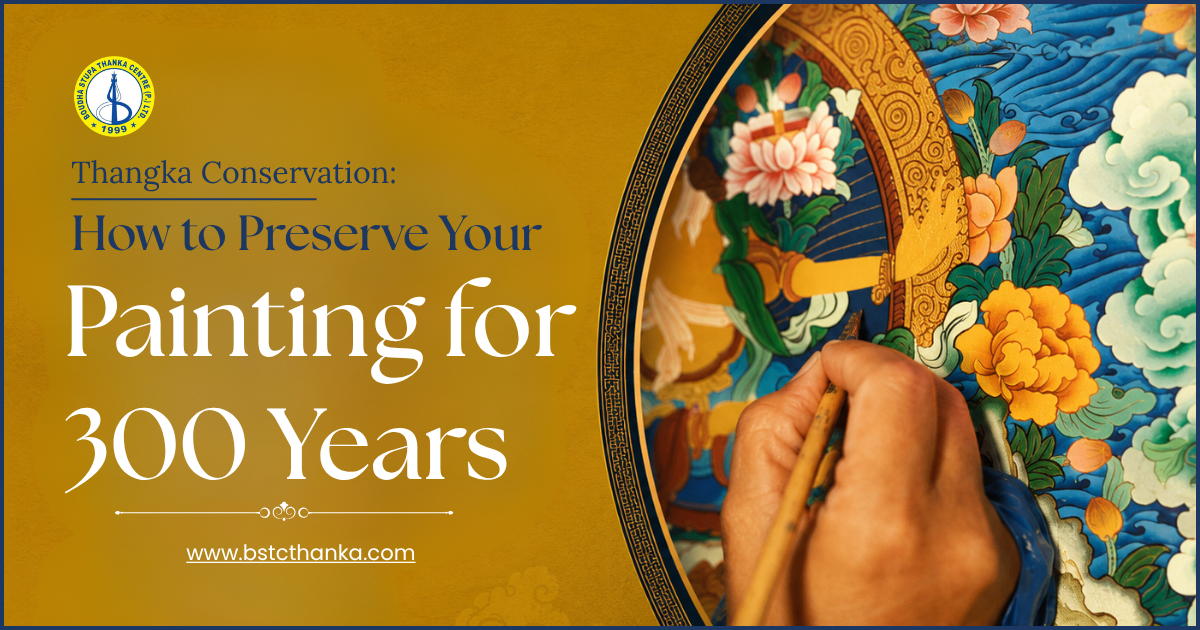
Thangka Conservation Guide: How to Preserve Your Painting for 300 Years
Thangkas are delicate works of art — hand-painted with mineral pigments on cotton canvas, often adorned with silk brocade. With the right care, a hand-painted thangka can last for centuries, passed down as both a spiritual object and a family heirloom. Done wrong, even a museum-quality piece can fade, mold, or crack within a decade.
This guide covers everything you need to know about thangka painting preservation — from lighting and humidity control to the age-old debate between rolling and framing, plus the warning signs that mean it's time to call a professional.
The 1 Enemy: Light (UV Damage)
Ultraviolet light is the single most damaging factor in thangka fading and pigment deterioration — especially for blues and greens, which are among the most light-sensitive mineral pigments used in traditional thangka painting.
Solution:
- Hang your thangka in a room with indirect natural light, never direct sunlight.
- If framing, use UV-filtering glass to block harmful rays while still allowing the piece to be displayed and admired.
- Never hang a thangka directly opposite a window — even reflected daylight can accelerate thangka pigment fading over the years.
- This single step is one of the most searched topics under "how to protect thangka from sun damage."
The 2 Enemy: Humidity & Mold
For thangka owners in Nepal, India, or other monsoon-affected regions, humidity control is critical to preventing mold on thangka paintings.
- The monsoon risk: Relative humidity above 60% creates ideal conditions for mold growth on canvas and brocade.
- Solution: Maintain relative humidity between 45–55%. A small dehumidifier or silica gel packets placed near or within the frame can help regulate moisture levels effectively.
- Critical warning: Never store a rolled thangka inside a sealed plastic bag — it traps moisture inside, which accelerates mold growth rather than preventing it. This is one of the most common mistakes people make when looking into long-term thangka storage.
Rolling vs. Framing: The Great Thangka Storage Debate
One of the most common questions in thangka care and maintenance is whether to roll or frame a piece. Both methods are valid — the right choice depends on your space, climate, and how often the thangka will be displayed.
Rolling (The Traditional Method)
- Allows the canvas to breathe naturally, which is how thangkas were designed to be stored and transported for centuries.
- Safe when done correctly — roll evenly around the bottom wooden dowel (roller).
- Caution: Never fold a thangka. Folding creates permanent creases and paint cracking along the fold line — one of the most irreversible forms of thangka damage.
Framing (The Modern Method)
- Offers strong protection from dust, humidity fluctuation, and accidental physical handling.
- Caution: The glass must never touch the painted surface directly — always use a mat board or spacer to create an air gap.
- Ensure any wood used in the frame is acid-free, as regular wood can off-gas acidic compounds that damage pigments and canvas over time.
Understanding this rolling vs. framing trade-off is essential for anyone researching "best way to store a thangka painting long-term."
Pest Control: Protecting Silk Brocade
The silk brocade mounting on many thangkas is highly attractive to carpet beetles and clothing moths, both of which can cause serious, hard-to-reverse damage.
Solution:
- Regular gentle vacuuming using a soft brush attachment removes eggs and larvae before infestation sets in.
- Occasional freezing — wrapping the piece carefully in plastic and placing it in a -20°C (-4°F) freezer for 72 hours — is a standard, museum-grade practice for killing pest larvae without using harmful chemicals.
This freezing method is widely used by professional conservators and is one of the safest thangka pest control methods available for home use, provided it's done carefully.
Cleaning a Thangka: What to Do (and Never Do)
- Never use water or solvents on a thangka — mineral pigments and traditional binders are highly sensitive to moisture and chemical exposure.
- For routine dust removal, use a very soft, natural-bristle brush (a sable makeup brush works well) with gentle, light strokes.
- For anything beyond surface dust — flaking paint, discoloration, or tears — do not attempt DIY cleaning or repair. Contact a professional thangka conservator instead.
This distinction between safe home maintenance and professional-only intervention is the most important rule in thangka cleaning and care.
Warning Signs You Need a Professional Conservator
Contact a professional thangka conservator immediately if you notice any of the following:
- Cracking or cupping of the paint layer (paint lifting or curling away from the canvas)
- White bloom — a hazy white film caused by saponification of the varnish layer
- Active mold spots — black or green fuzzy patches, which indicate a live infestation, not just old staining
- Lifting brocade — stitching along the silk mount coming loose or failing
Recognizing these thangka damage warning signs early can be the difference between a simple professional cleaning and irreversible loss of the artwork.
Frequently Asked Questions
Q1: How long can a properly cared-for thangka last? With correct light exposure, humidity control, and pest prevention, a well-maintained thangka can last several hundred years — this is why proper conservation practices matter as much as the quality of the original painting.
Q2: Is it better to roll or frame a thangka? Both are valid. Rolling is the traditional method and allows the canvas to breathe, ideal for pieces stored much of the time. Framing offers better protection from dust and handling but requires acid-free materials and a spacer so the glass never touches the paint.
Q3: Can I clean my thangka myself? Only light surface dusting with a soft, natural-bristle brush is safe to do yourself. Never use water or solvents, and never attempt to fix flaking paint, tears, or mold yourself — these require a professional conservator.
Q4: What humidity level is safe for storing a thangka? Relative humidity between 45–55% is ideal. Above 60%, especially during monsoon season in Nepal or India, the risk of mold growth increases significantly.
Q5: Why shouldn't I store a rolled thangka in a plastic bag? Sealed plastic traps moisture against the canvas and brocade, creating an ideal environment for mold — the opposite of what you want for long-term preservation.
Q6: How do I get rid of pests like moths or carpet beetles on my thangka? Regular gentle vacuuming with a soft brush attachment helps prevent infestation. For active pest concerns, wrapping the thangka in plastic and freezing it at -20°C for 72 hours is a standard, museum-safe method for killing larvae.
Q7: What are the first signs that a thangka needs professional attention? Watch for paint cracking or cupping, a hazy white film (varnish bloom), active black or green mold patches, or brocade stitching coming loose. Any of these warrant contacting a conservator rather than attempting a DIY fix.
👉 Back to the main guide: The Complete Guide to Tibetan Thangka Painting

.png)