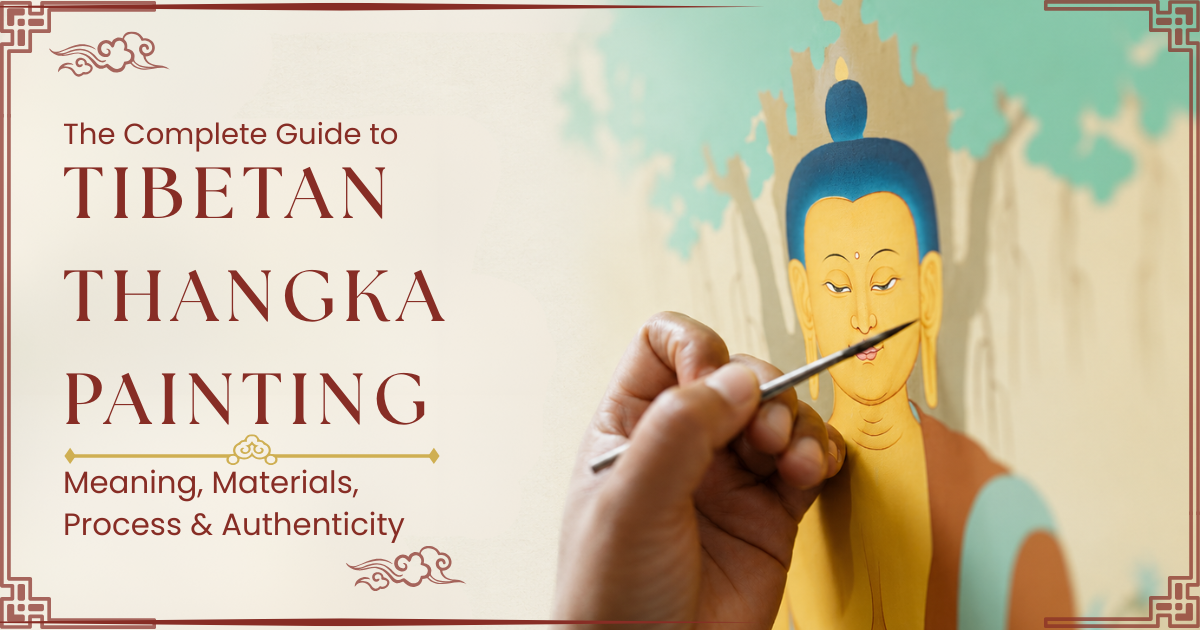
The Complete Guide to Tibetan Thangka Painting: Meaning, Materials, Process & Authenticity
Introduction
When I first watched Purna Lama prep materials in BSTC's studio—the mineral pigments arranged like a monk's altar, each one ground to a specific particle size—I realized why Western art suppliers couldn't replicate thangka authenticity. This wasn't about having access to rare ingredients. It was about understanding why each material exists and how it connects to Buddhist cosmology.
A thangka is not decoration. It is a teaching tool disguised as art. When a Buddhist teacher commissioned a thangka, they weren't thinking "nice decoration for my wall." They were thinking: "I want a visual record of this deity's form, iconography, and meaning that can be studied, meditated upon, and transmitted to students for generations."
Three Lenses to Appreciate Thangka
Throughout this guide, I invite you to view thangkas through three distinct lenses:
- The Spiritual Lens– Does it function as a meditation tool? (Requires iconographic accuracy).
- The Cultural Lens – Does it represent a living heritage? (Requires regional context).
- The Aesthetic Lens – Is it visually beautiful? (Valid on its own, but honesty about its purpose matters).
If you're reading this because you want to understand thangka art—whether you're a collector, a serious meditator, or someone curious about one of the world's most beautiful and misunderstood art forms—this guide covers everything: what thangkas are, how they're made, what materials matter, how to evaluate authenticity, and how to buy pieces that will function spiritually and last for generations.
Table of Contents
- History of Thangka Painting
- Understanding Thangka Iconography
- Thangka Materials (Canvas, Pigments & Gold)
- The Complete Painting Process
- How to Buy a Thangka
- Thangka Authenticity & Evaluation
- Investment & Market Perspective
- Conservation & Long-Term Care
- AI, Digital & Contemporary Debate
- FAQ & Glossary
Part One History
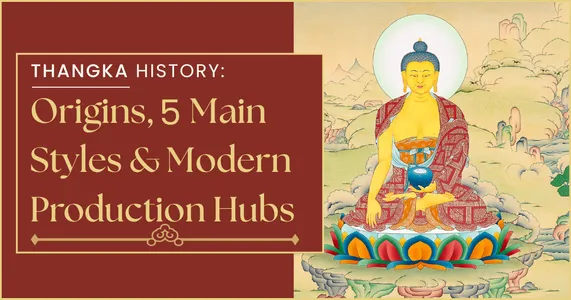
Thangka painting developed across multiple centers over centuries, originating in Tibet (11th century) with influences from Indian Pala scroll paintings. Nepal and Bhutan developed parallel traditions. Today, major production hubs exist in Lhasa (Tibet), Kathmandu (Nepal), Bhutan, and Dharamshala (India). The four main styles are Menri (Medicine Mountain), Karma Gadri (Karma Valley), Newari (Nepali), and Bhutanese. Note: 90% of commercial thangkas today are stylistic hybrids.
👉 For the complete deep-dive into History, read the full guide: [Thangka History: Origins, Styles & Production Hubs].
Part Two Iconography
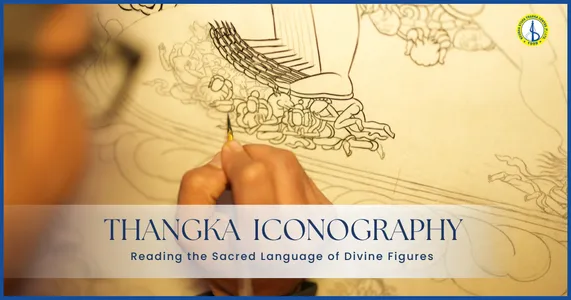
Iconographic accuracy is the no one marker of authenticity. Thangkas color-code deities according to the 5 Dhyani Buddhas (Vairochana-White, Akshobhya-Blue, Ratnasambhava-Yellow, Amitabha-Red, Amoghasiddhi-Green). Hand gestures (Mudras) and postures (Asanas) are not random—they encode specific teachings. For example, Bhumisparsha Mudra (right hand touching earth) is only used for Shakyamuni Buddha.
👉 For a complete visual guide to Mudras, Asanas, and Attributes, read: [Thangka Iconography: The Visual Language].
Part Three: Materials
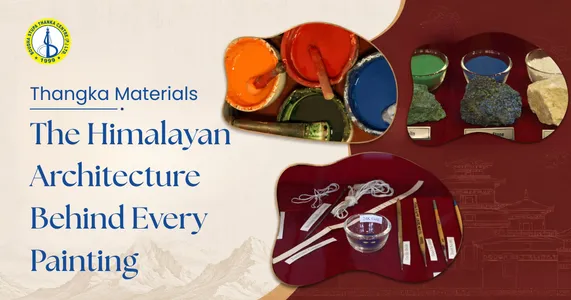
Authentic thangkas use cotton-silk canvas prepared with a glue-chalk mixture called Rabbat (takes 10–14 days). Mineral pigments like Lapis Lazuli (blue), Cinnabar (red), and Malachite (green) are ground to specific particle sizes. Gold is applied as 24-karat leaf or paint. The choice of binder (hide glue, yak butter) and varnish (shellac vs acrylic) determines if the piece lasts 50 years or 500 years.
👉 For a technical breakdown of pigments and canvas prep, read: [Thangka Materials: The Himalayan Architecture Behind Every Painting].
Part Four: Painting Process
A genuine thangka takes 3 to 24 months to complete. The process involves: Pre-painting (canvas prep & design transfer), Underpainting (shadow mapping for 3D volume), Color Blocking, Layering (3-5 layers on the face), Gold Work, and Final Varnishing. Master artists spend days painting just the deity's eyes—this is where the "spiritual life" of the thangka emerges.
👉 For a step-by-step timeline of the 6 stages, read: [The Complete Thangka Painting Process].
Part Six: Buying Guide & Authenticity
Evaluate thangkas on a 4-Tier spectrum:
- Tier 1 (Commission, $328+): 6-24 months, full accuracy.
- Tier 2 (Gallery Master, $131-$655): 5-30 years old, mostly accurate.
- Tier 3 (Studio, $33-$164): Mass-produced, simplified.
- Tier 4 (Print/Souvenir, <$33): Decorative only.
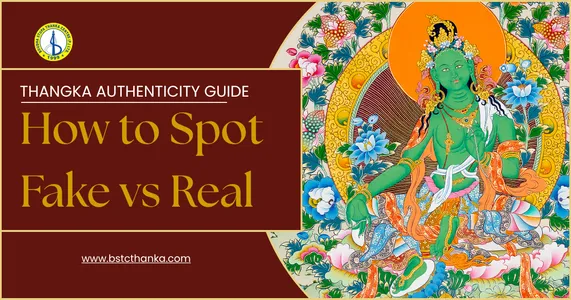
Always ask: "What pigments?", "Who made this?", and "How old is it?" Check the eyes and brushwork for consistency.
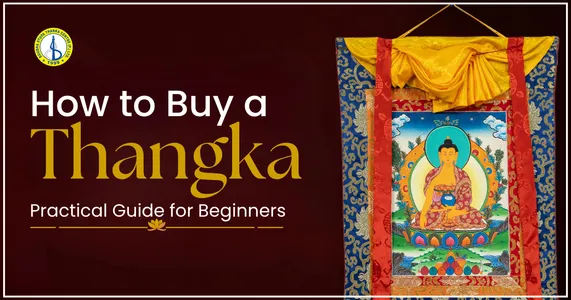
👉 For detailed buying checklists and authenticity markers, read: [How to Buy a Thangka].
Part Six: Investment & Conservation
- Investment: Only Tier 1 & high-end Tier 2 pieces appreciate. Museum-quality 16th-18th century thangkas sell for $50k-$500k at Christie's. Contemporary masters (like those at BSTC) see their work appreciate over 10-15 years.
- Conservation: UV light is the no one enemy (fades blues/greens). Humidity above 60% invites mold. Never use water to clean. Roll traditionally or frame with UV glass and spacers.
👉 For market trends, auction data, and step-by-step care instructions, read: [Thangka Investment Guide](#) and [Thangka Conservation & Care](#).
Part Seven: AI & Digital Debate (Summary)
Printed thangkas are useful as low-cost references for beginners but lack the "lifeforce" of a hand-painted piece. AI-generated thangkas are problematic because AI understands aesthetics, not iconography (e.g., giving Chenrezig three arms). However, respectful contemporary innovations that maintain core iconography are a legitimate evolution of the art form.
👉 For the full breakdown of digital vs traditional, read: [AI, Digital & Contemporary Thangka Debate](#).
Frequently Asked Questions (Summary)
Q: What's the difference between a thangka and a regular painting?
A: A thangka is created for Buddhist practice—it follows canonical iconographic rules, not the artist's imagination.
Q: Are all thangkas Tibetan?
A: No. Traditions developed in Tibet, Nepal, Bhutan, and India (Dharamshala).
Q: How old is a typical thangka I might buy today?
A: Most commercial thangkas are 10–40 years old. Be skeptical of "antique" claims under $3,277.
Q: Does synthetic pigment make a thangka inauthentic?
A: No, if disclosed. Synthetic pigments are chemically identical and often more stable.
Q: What's a fair price?
A: $13–$33 (Decorative), $33–$164 (Studio), $131–$655 (Master), $328+ (Commission/Investment).
Q: Can I roll up a thangka?
A: Yes, only around the bottom wooden roller, painted side facing inwards. Never fold it.
Conclusion: The Future of Thangka Art
We are at a turning point. Never before have thangkas been so accessible, yet so flooded with cheap alternatives. The choice is ours: let it become a souvenir, or recognize it as a sacred teaching tool with 900 years of lineage.
As someone who writes from Kathmandu, I emphasize: thangka art is our inheritance. We are stewards of it. If you are buying, know your need, ask direct questions, and pay fairly for the artist's time. If you are an artist, resist the pressure to work faster. Your attention shows in the final work. An object made with attention functions differently than one made carelessly.
That is what authentic thangka art is: not a price tag or a certificate, but a felt sense that someone honored the tradition. Everything else follows from that.
Glossary of Key Terms
Thangka: A scroll painting used for Buddhist teaching and meditation.
Rabbat (Gesso): Glue-chalk mixture applied to the canvas.
Menri (མན་རི་): "Medicine Mountain" style; highly detailed, lighter palette.
- Karma Gadri (ཀརྨ་སྒད་རི་): "Karma Valley" style; thicker outlines, bolder forms.
- Newari: Indigenous style of Kathmandu Valley; rich in gold and narrative panels.
- Mudra: Symbolic hand gesture of a deity.
- Asana: Symbolic posture of a deity.
- Khor: Wooden frame used to mount the thangka.
Further Reading & Resources
- "Tibetan Thangka Painting: Methods and Materials" by David Jackson.
- "Buddhist Iconography" by Lokesh Chandra.
- "BSTC (Boudha Stupa Thangka Center) – Kathmandu, Nepal.
- Rubin Museum of Art – New York (digital collection).
- Himalayan Art Resources (himalayanart.org) – Best online iconography database.
.png)